Creating New Homes for Falls Creek’s Native Wildlife
July 10, 2026
A community-led partnership is helping provide much-needed habitat for native wildlife in Falls Creek through the installation of ten purpose-built nest boxes throughout the village.
Over recent months, Alpine Resorts Victoria (ARV) – Falls Creek has worked alongside local volunteers, wildlife experts and community partners to deliver the project, creating safe shelter for native animals displaced by habitat loss while bringing the community together to care for the alpine environment.
Installed ahead of the winter season, the nest boxes will offer year-round refuge for native wildlife as Falls Creek enters its snowy months. They also showcase the important conservation work taking place across the resort, supporting hollow-dependent species while native forests continue to recover.
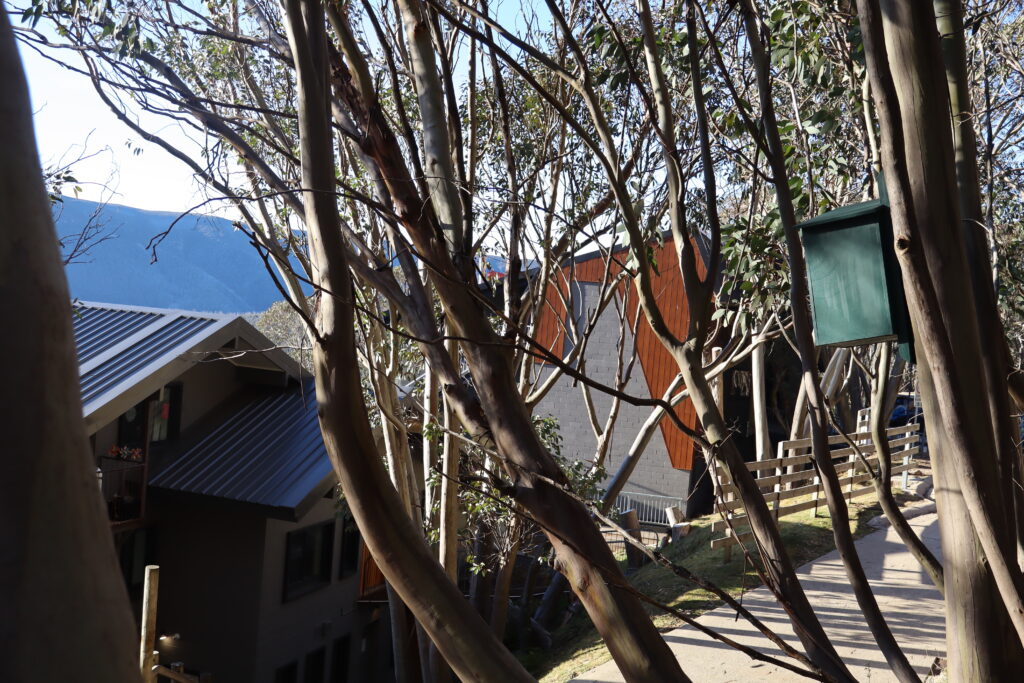
Installed ahead of winter, one of ten purpose-built nest boxes now providing safe, year-round habitat for native wildlife throughout Falls Creek.
Thanks to the commitment and care of local community member Deb Howie, the plight of Falls Creek’s ringtail possums was brought to the forefront. As suitable shelter became increasingly limited, a community-led project was developed to provide safe homes for displaced wildlife.
Determined to make a difference, Deb partnered with ARV Falls Creek and local wildlife experts to help develop a long-term solution.
Following successful funding approvals through Emergency Recovery Victoria and the Victorian Department of Energy, Environment and Climate Action (DEECA), the Falls Creek Community Recovery Team secured funding to deliver the community-led nest box project.
Working closely with local wildlife rescue groups, Deb helped identify suitable locations and design requirements to ensure the nest boxes would withstand Falls Creek’s harsh alpine conditions while providing safe habitat for a range of native species.
The project was brought to life through the outstanding craftsmanship of volunteers from the Mount Beauty Men’s Shed, who carefully constructed ten durable nest boxes ready for installation throughout the village.
ARV Falls Creek’s Environmental, Community Recovery and Operations teams worked together to coordinate planning, installation and ongoing monitoring, demonstrating the power of collaboration in supporting environmental recovery.
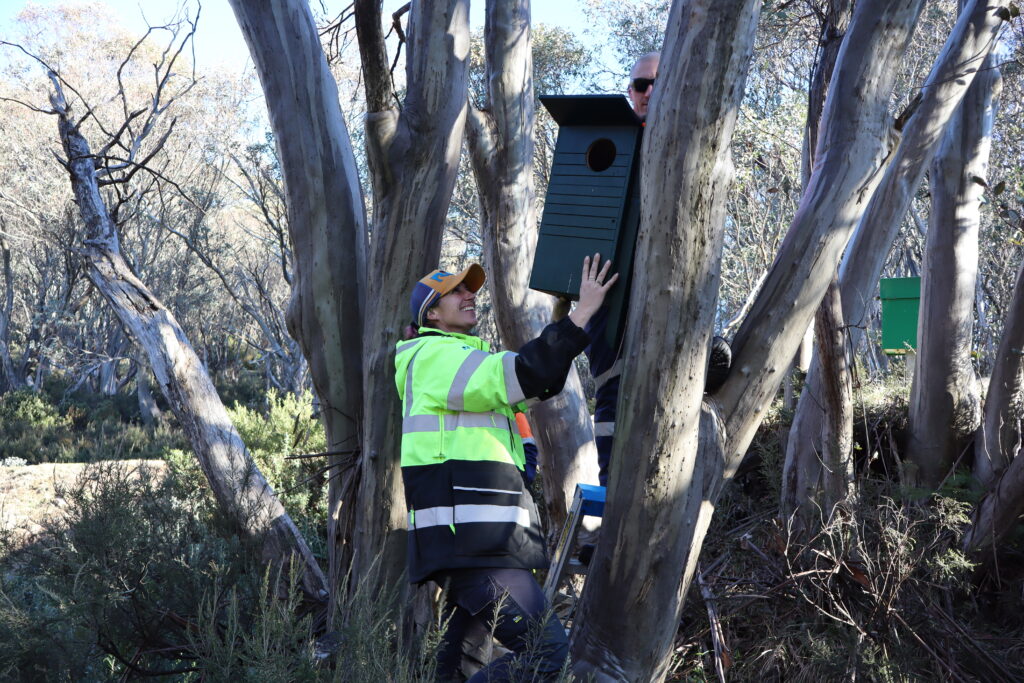
ARV Falls Creek staff installing one of ten purpose-built nest boxes in carefully selected locations throughout the village.
Restoring Habitat in the Alpine Environment
While the project was initially inspired by the needs of Falls Creek’s ringtail possums, the importance of nest boxes extends far beyond a single species.
Across the Victorian Alps, the loss of natural tree hollows has become a significant ecological challenge. Severe bushfires, historic logging and land clearing, together with the ongoing impacts of climate change, have dramatically reduced the number of mature hollow-bearing trees. Increasingly frequent fires and the decline of Snow Gum forests continue to place pressure on wildlife that depends on these habitats.
Natural tree hollows are incredibly slow to form. Even a small hollow can take more than 120 years to develop, while larger hollows may require between 180 and 300 years. These natural shelters provide essential breeding sites, protection from predators and refuge from the harsh alpine climate for many native mammals, birds and reptiles.
The Gang-gang Cockatoo, a much-loved visitor to Falls Creek, relies on tree hollows for nesting and shelter and highlights the importance of protecting and replacing lost habitat across the alpine environment.
Purpose-built nest boxes provide an important interim solution while native forests recover. They offer immediate habitat for hollow-dependent wildlife and allow ARV Falls Creek’s Environmental Team to monitor wildlife populations, breeding activity and the success of ongoing restoration efforts.
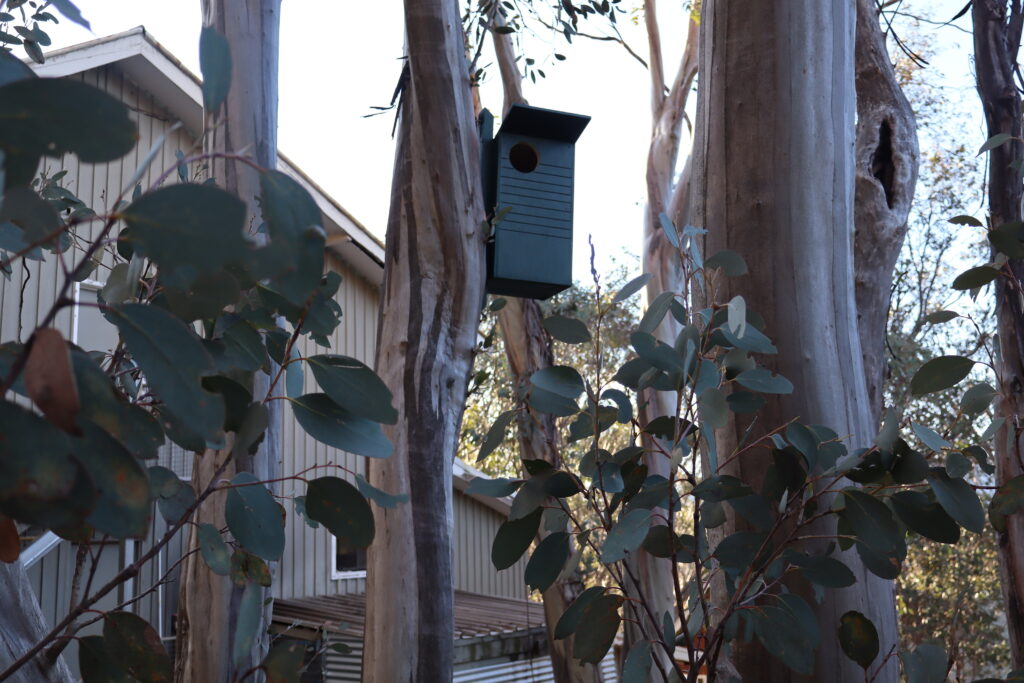
Nest boxes provide important habitat while natural tree hollows take generations to form.
Inspiring the Next Generation
Falls Creek Primary School students will continue to play an important role in the project by helping track and monitor the nest boxes as part of an ongoing environmental learning program.
Through hands-on field experiences, students will build a deeper understanding of native wildlife, habitat conservation and the unique alpine environment while contributing valuable observations to the long-term success of the project.
Supporting young people through environmental education has been a major focus of the Community Recovery Program. Falls Creek Primary School has enthusiastically embraced opportunities to connect with the alpine environment through a range of projects, including restoring the school grounds by removing invasive weeds and planting native species with support from the ARV Falls Creek Environmental Team.
Their passion for local wildlife can also be seen throughout the village, with students selecting the endangered native species featured in Falls Creek’s wildlife murals.
A Community Caring for Country
Projects like this show how local knowledge, community leadership and environmental expertise can come together to create lasting benefits for both people and wildlife.
As you explore Falls Creek, keep an eye out for the beautifully crafted nest boxes providing safe homes for native animals throughout the village.
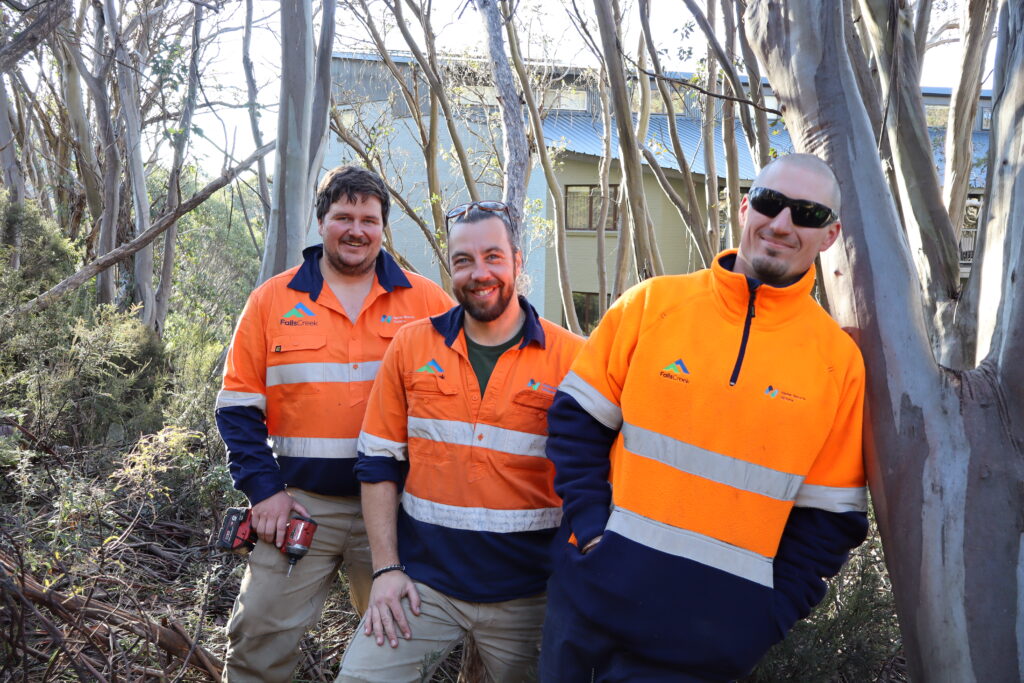
ARV Falls Creek’s Operations team supported the delivery of this community-led conservation project.
Report a Wildlife Emergency
If you see a sick, injured, trapped or orphaned native animal anywhere in Victoria, call the Wildlife Victoria 24/7 Emergency Response Service on (03) 8400 7300 or report it online at www.wildlifevictoria.org.au/report-a-wildlife-emergency/.
The hotline and online reporting service operates 24 hours a day, 7 days a week, ensuring wildlife receives help as quickly as possible.
Falls Creek Community Recovery Funding was provided to ARV Falls Creek through joint Victorian and Australian Government support following the 2022 Bogong High Plains Landslip Event.